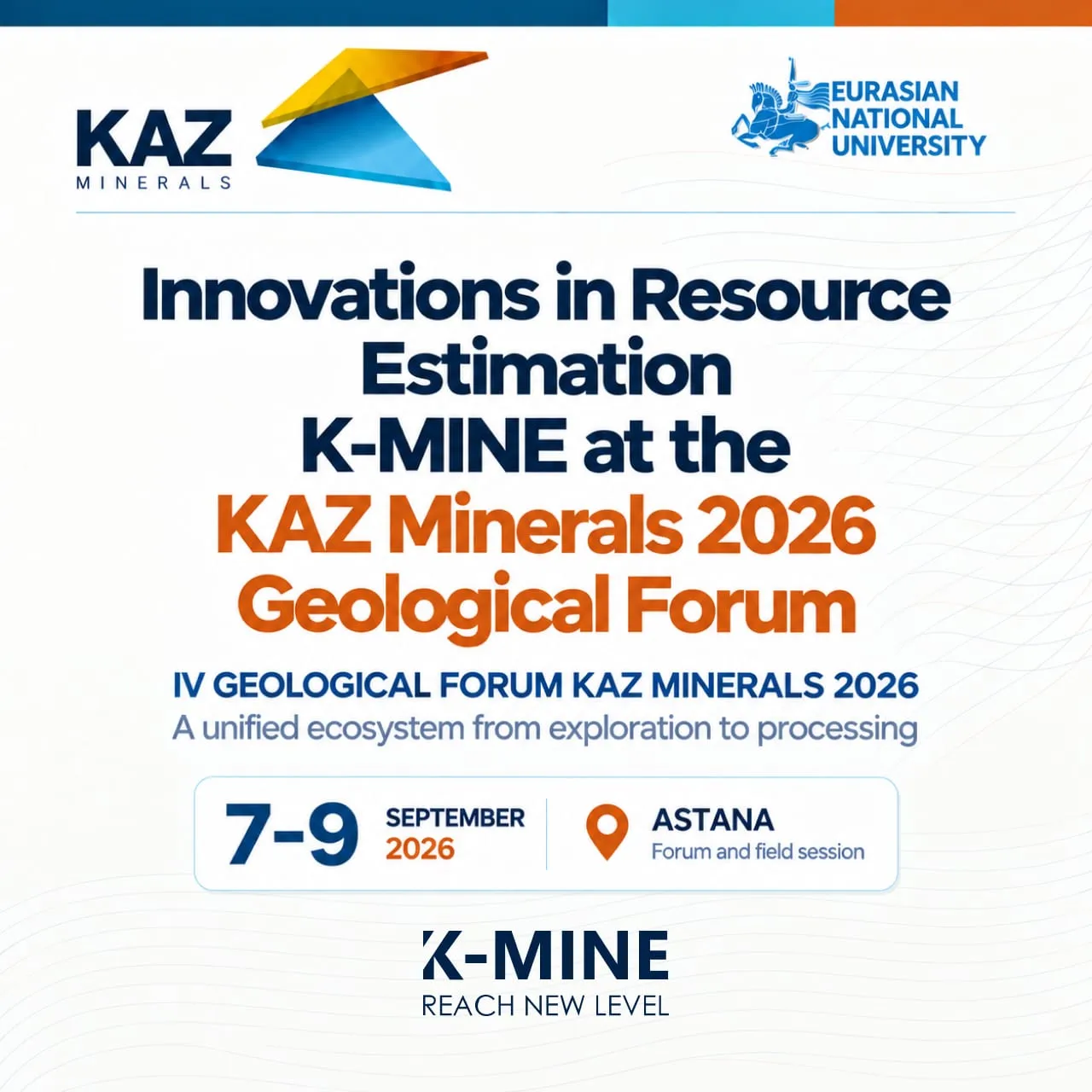
From September 7 to 9, Astana is hosting the IV KAZ Minerals Geological Forum 2026 under the theme “A Unified Ecosystem from Exploration to Processing.” As part of the forum, K-MINE Chief Geologist Nataliia Korol presented “Innovations in Resource Estimation and Auditing for Mining Companies in Kazakhstan.”
Turning Historical Data into a Reliable Resource Model
Many mining companies have decades of historical exploration data. But before that information can support modern mineral resource estimation, it needs to be digitized, checked, analyzed, and incorporated into a reliable 3D geological model.
K-MINE brings these steps into one environment, from digitizing historical materials and QA/QC to statistical and geostatistical analysis, 3D geological modeling, and mineral resource estimation.
Variogram analysis, kriging, IDW, octant analysis, Kriging Variance, and Kriging Efficiency help geologists understand spatial continuity and support resource classification with a clearer view of uncertainty.
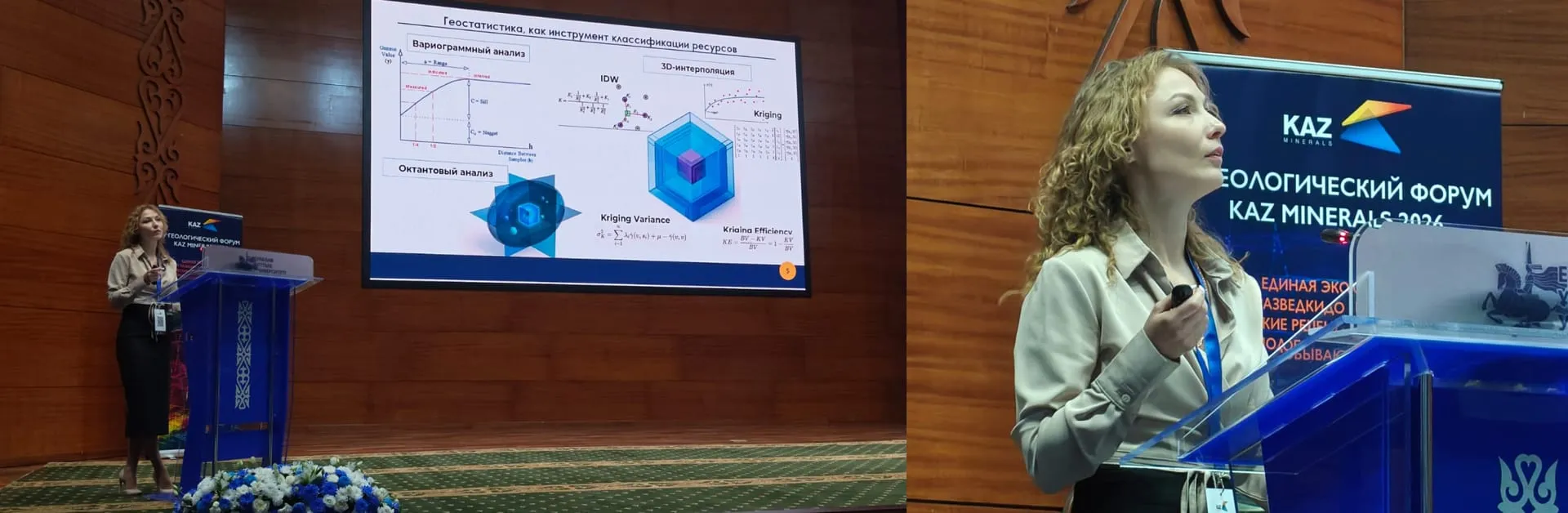
How Much Drilling Is Enough?
More drilling does not automatically mean a better result.
QKNA helps evaluate whether tightening the drill spacing will meaningfully improve confidence in the model or simply increase exploration costs. The goal is to find a drilling pattern that provides enough geological information without paying for unnecessary drillholes.
This is where geostatistics in K-MINE becomes more than a resource estimation tool. It helps teams understand where additional data is really needed, how much confidence they can place in the current model, and whether further drilling is worth the investment.
K-MINE connects geological modeling with mine design, optimization, scheduling, surveying, drill and blast, and other mining workflows in a single digital environment. This approach closely reflects the forum’s main theme: building a continuous ecosystem where exploration data becomes the foundation for the next stages of mine development and decision-making.