
Underground Mine Ventilation Software
Network Calculation. Fan Selection. Evacuation Planning.
Calculate air distribution across underground ventilation networks using node-based modeling. Run airflow and resistance calculations, analyze gas concentrations and fire scenarios, and select fans using characteristic curves and operating points. Plan evacuation routes with travel time through contaminated areas and compare ventilation scenarios with color-coded visualization. Import and export calculation data via XML.
 Download Presentation
 Calculate Ventilation Networks
Model nodes and branches, then calculate airflow, aerodynamic resistance, depression, and velocity.
Analyze Mine Atmosphere Risks
Model CO2 and CH4 limits, fire points, gassing time, and thermal drop to support safety checks.
Select Fans by Operating Point
Use characteristic curves to evaluate pressure-flow performance and choose fans and ducting.
Plan Evacuation Routes
Identify shortest routes and travel time based on distance and atmospheric conditions.

Calculate Ventilation Networks
Build underground ventilation networks using node-based topology and calculate airflow, aerodynamic resistance, depression, and velocity for shafts, drifts, and cross-sections. Use six calculation methods: by minimum velocity, personnel count, temperature, CO2 limits, CH4 limits, or mechanical extraction requirements.
Compare configurations side by side with color-coded differences. For dead-end workings, calculate ventilation for explosive extraction and drilling and blasting operations, including pipeline parameters.
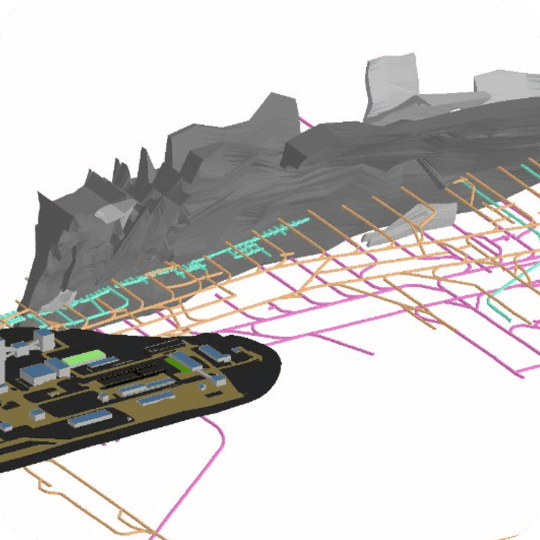

Model Mine Atmosphere Pollution
Calculate gas concentrations based on current network conditions, emission sources, and airflow distribution. Color indicators highlight areas exceeding CO2 and CH4 limits.
Run fire point simulations and calculate gassing time and thermal drop. Test ventilation configurations to maintain safe conditions and support regulatory requirements.
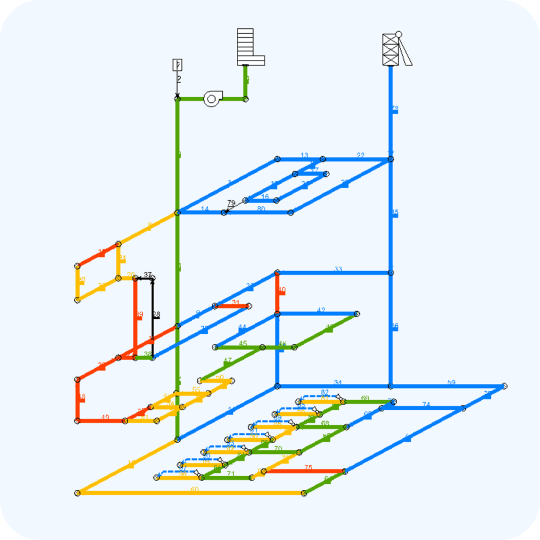

Validate Models With Depression Surveys
Import depression survey data manually or from dispatch systems and incorporate field measurements to reflect actual network conditions in the calculation model.
Compare calculated versus measured values to validate assumptions and identify areas where behavior differs from predictions. Export datasets via XML for documentation and external analysis.
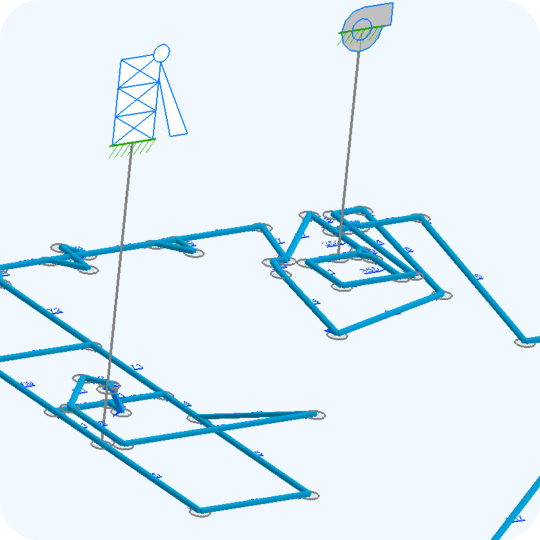

Select Fan Operating Modes
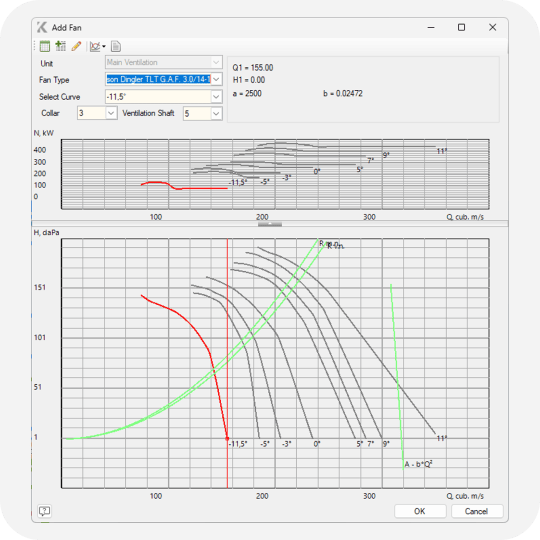
Build a fan database with graphical characteristic curves and evaluate pressure-flow relationships and operating points against network resistance. Flag inefficient conditions automatically and compare alternatives.
Select optimal fan type, duct diameter, and fittings. Evaluate operating modes that minimize energy consumption while meeting airflow targets. Compare costs between configurations.

Plan Worker Evacuation Routes
Calculate shortest evacuation routes from hazardous areas and evaluate paths for specific workings or all areas with personnel. Routes account for distance and atmospheric conditions, including travel time through safe or gas-contaminated workings.
Display routes on the mine map with contamination indicators. Routes can be adjusted manually. Generate evacuation documentation for emergency planning.









We offer Mining Consulting!
K-MINE combines deep engineering experience with advanced software capabilities, helping mining companies improve operational performance and profitability.
Frequently Asked Questions
Mine ventilation software calculates air distribution in underground networks, analyzes airflow, aerodynamic resistance, gas concentrations, and fan performance. It is used for ventilation planning, safety compliance, and emergency response documentation.
Six methods are supported: by minimum air velocity, number of personnel, temperature requirements, CO2 concentration limits, CH4 concentration limits, and mechanical extraction requirements. Dead-end workings include calculations for explosive extraction and drilling and blasting operations.
Yes. The module calculates gas concentrations throughout the network, simulates fire points, and determines gassing time and thermal drop. Color indicators help identify areas exceeding permissible limits.
The system finds shortest paths from hazardous areas to safe exits using distance and atmospheric conditions. It calculates travel time through safe and contaminated workings, displays routes on the mine map with contamination indicators, and supports manual route adjustments.
You can store graphical characteristic curves for main and auxiliary fans and use pressure-flow analysis to select optimal fan type, duct diameter, and fittings based on network requirements.
Request a Demo
See how this module can help your mining operations.