
Pit Optimization Software
Optimize Ultimate Pit Limits. Build Shells. Plan Phases.
Define ultimate pit limits using the PseudoFlow algorithm based on Lerchs-Grossmann. Generate nested pit shells by adjusting revenue factors, then convert shells into practical pushback sequences for long-term mine planning. Apply slope angle constraints by sector, and run sensitivity analysis on commodity prices, costs, recoveries, and slope angles to stress-test project economics. Request a demo to review your scenarios in K-MINE.
 Download Presentation
 PseudoFlow Algorithm
Use the PseudoFlow approach based on Lerchs-Grossmann to solve ultimate pit limits efficiently.
Nested Pit Shells
Create shell sets by revenue factor to support phase selection and strategic mine planning.
Sector Slope Constraints
Define slope angles by sector to align pit limits with geotechnical requirements.
Sensitivity Analysis
Quantify NPV sensitivity to price, cost, recovery, and slope assumptions before committing to a boundary.

Build Optimization Scenarios
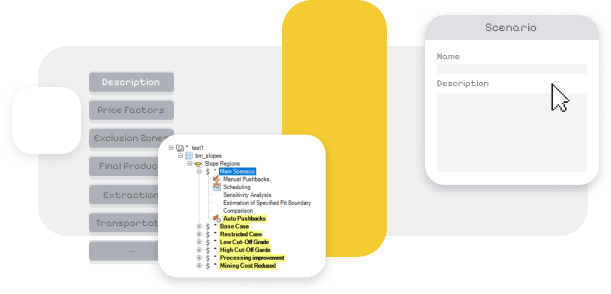
Build optimization scenarios directly from block model data. Define economic parameters such as commodity prices, mining and processing costs, and recovery factors.
Configure multiple scenarios to test different assumptions, then store inputs and outputs for comparison and audit trails.

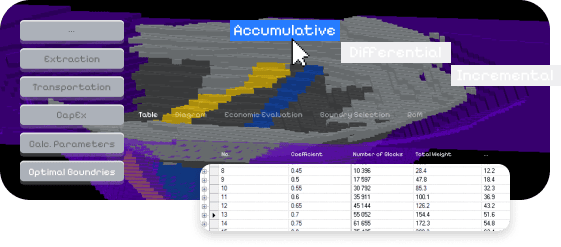
Review Nested Shell Results
Review optimization results as nested pit shells, where each shell represents an optimal boundary at a specific revenue factor (also called revenue adjustment factor). Analyze shell statistics such as tonnage, grade, strip ratio, and economic value, then select shells for further evaluation and design development.
Track Key Metrics in One View
Review key optimization metrics on a single dashboard and compare scenarios side by side with summary statistics.
Identify the revenue factor range that supports your project economics, then export results for financial modeling.
Run Sensitivity Analysis
Test pit economics against commodity price changes, cost variability, recovery assumptions, and slope angle updates. Generate charts that show how value, tonnage, and strip ratio respond to each parameter.
Identify the inputs that drive viability and focus data collection and review effort where it matters most.

Create Pushback Phases
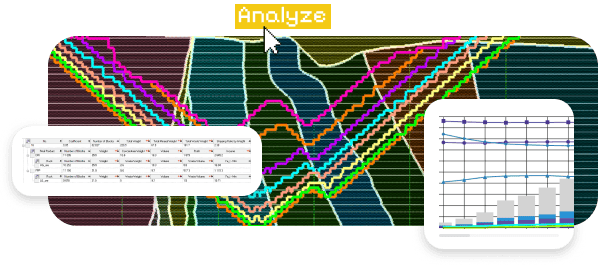
Convert nested shells into mineable pushback phases. Group shells into practical stages with smooth transitions, then adjust boundaries for access and operational constraints. Export pushbacks for downstream scheduling and detailed design.
Link Phases to Production Schedules
Link pushback phases to high-level production schedules for life-of-mine planning. Define period lengths and production rates, generate cash flow forecasts from scheduled phases.
Evaluate how sequence choices influence project NPV.
Compare Scenarios Side by Side
Compare scenarios using charts and tables to see how assumptions change pit geometry, tonnage, and value. Document scenario inputs and results for stakeholder review, then export comparison outputs in standard formats.

Evaluate Designed Pits Against Optimal Shells
Estimate tonnage and grade inside designed pit shells and compare design pits to optimal shells to quantify differences. Track design changes and see how they affect strip ratio, revenue, costs, and value before moving to detailed engineering.
Run Sensitivity Analysis
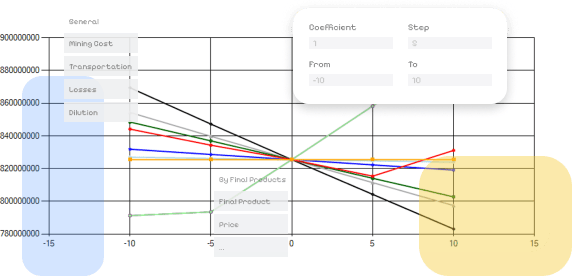
Test pit economics against commodity price changes, cost variability, recovery assumptions, and slope angle updates. Generate charts that show how value, tonnage, and strip ratio respond to each parameter.
Identify the inputs that drive viability and focus data collection and review effort where it matters most.

Create Pushback Phases
Convert nested shells into mineable pushback phases. Group shells into practical stages with smooth transitions, then adjust boundaries for access and operational constraints.
Export pushbacks for downstream scheduling and detailed design.
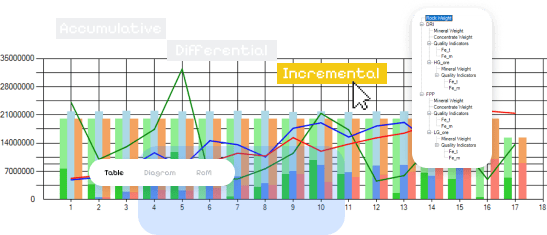
Link Phases to Production Schedules
Link pushback phases to high-level production schedules for life-of-mine planning. Define period lengths and production rates, generate cash flow forecasts from scheduled phases. Evaluate how sequence choices influence project NPV.
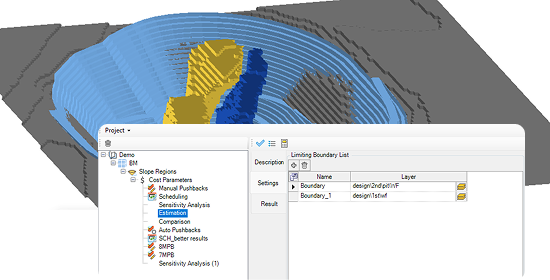
Evaluate Designed Pits Against Optimal Shells
Estimate tonnage and grade inside designed pit shells and compare design pits to optimal shells to quantify differences. Track design changes and see how they affect strip ratio, revenue, costs, and value before moving to detailed engineering.
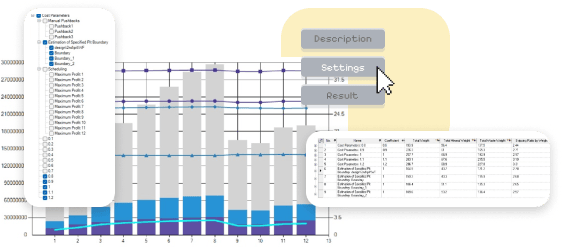
Compare Scenarios Side by Side
Compare scenarios using charts and tables to see how assumptions change pit geometry, tonnage, and value.
Document scenario inputs and results for stakeholder review, then export comparison outputs in standard formats.








We offer Mining Consulting!
K-MINE combines deep engineering experience with advanced software capabilities, helping mining companies improve operational performance and profitability.
Frequently Asked Questions
Pit optimization software selects the most profitable pit boundary using block model grades, prices, costs, recoveries, and slope constraints. It generates nested pit shells across revenue factors to support strategic mine planning.
Lerchs-Grossmann is a graph-based method for determining the ultimate pit limit that maximizes undiscounted value while respecting slope constraints. It is the standard approach used in commercial pit optimization tools, including K-MINE's PseudoFlow implementation.
PseudoFlow is K-MINE's pit optimization engine built on Lerchs-Grossmann methodology. It solves for ultimate pit limits across a range of revenue factors in a single run, producing nested shells you can use directly for pushback selection and phase planning.
Yes. Convert nested shells into mineable pushback phases. Use automatic mode to help select sequences, or manual mode to control phase boundaries and practical access constraints.
Test how price, mining and processing costs, recovery, and slope angles affect value, tonnage, and strip ratio. Use the results to identify the assumptions that drive NPV and prioritize what to validate.
Request a Demo
See how this module can help your mining operations.