
Drill and Blast Software
Design Patterns. Calculate Charges. Control Timing.
Design drill patterns with automatic burden and spacing optimization, calculate charges with decked configurations, and build blast timing sequences using multiple delay methods. Simulate detonations with millisecond-resolution visualization, define dangerous zones for safety planning, and analyze fragmentation from drone imagery. Send patterns directly to drilling rigs and generate blasthole passports to track parameters from design through execution. Request a demo to review the workflow on your bench geometry and rock conditions.
 Download Presentation
 Design Patterns Faster
Use regular, staggered, 90-degree, and second-row stagger patterns with LLR calculation options to guide layout decisions.
Calculate Charges Accurately
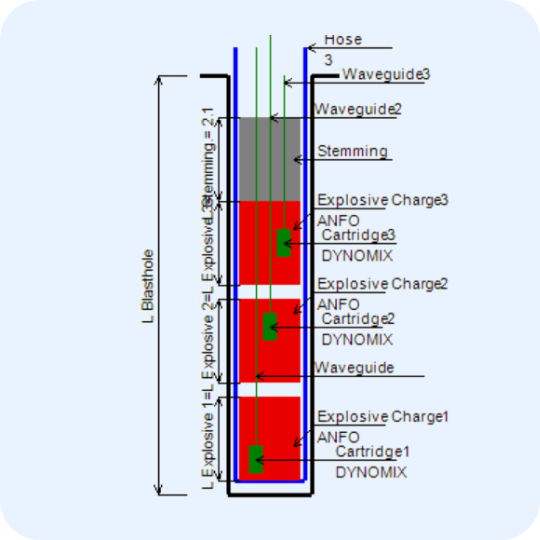
Design decked charges, account for explosive density and hole diameter, and set stemming and overdrill by row position.
Control Timing and Delays
Build sequences with five delay methods to shape energy distribution, fragmentation, and muckpile displacement.
Validate Safety Before Firing
Simulate detonation sequences and calculate dangerous zones to support safe stand-off distances and execution plans.
Plan Blast Design and Operations
Plan drill blocks with automatic burden and spacing optimization based on rock properties and bench geometry. The system calculates Line of Least Resistance (LLR) using four methods: Optimum Angle, Optimum Angle Along Line, Optimum Angle and Depth, and Optimal Direction Along Line.
Integration with geological data applies rock-specific parameters to each blast block. Generate blasthole passports with complete parameter tracking for quality control and documentation.
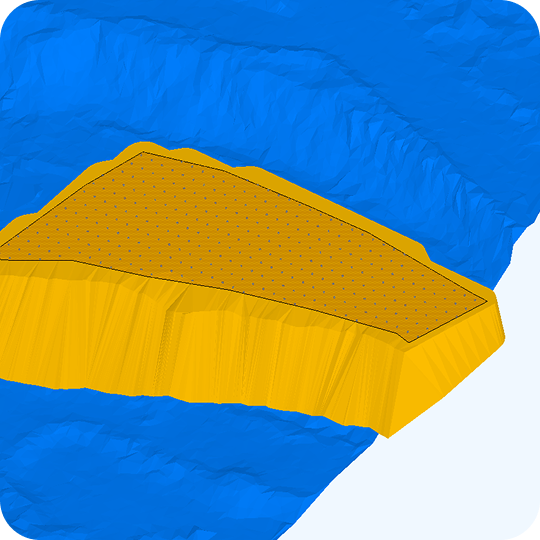
Design Drill Patterns
Create drill patterns using four arrangement modes: regular grid, staggered, at 90 degrees, and staggered from second row. Configure blasthole positions from block boundary or use automatic placement algorithms.
Twin hole configurations available with six layout options for production holes. Calculate optimal depths, angles, and spacing based on bench height, rock type, and fragmentation targets.
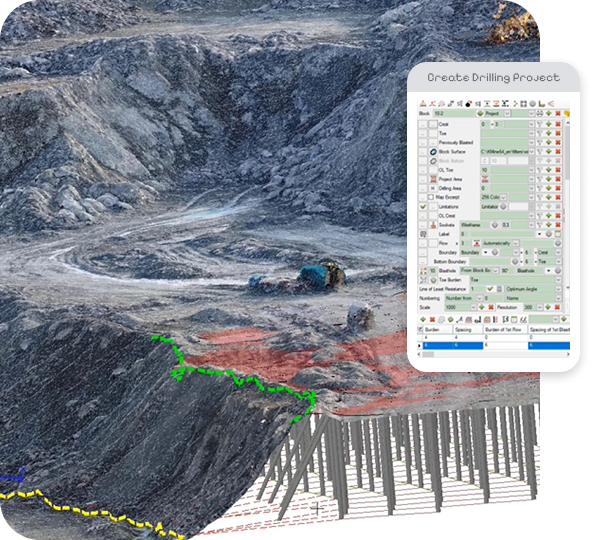
Calculate Charges
Design decked charges with multiple explosive types per hole. Calculate charge capacity based on explosive density and hole diameter. Specify stemming lengths and overdrill depths differentiated by row position.
The system tracks explosive consumption per blast and generates loading sheets for field crews. Optimize powder factor while meeting fragmentation requirements.
Design Blast Timing and Delays
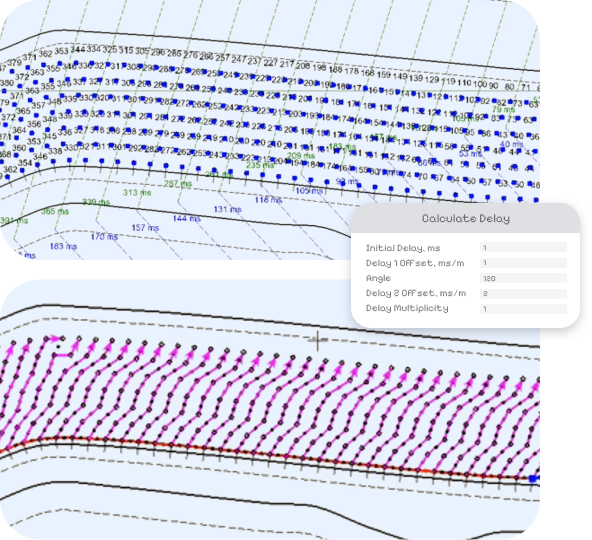
Configure blast timing sequences using five delay calculation methods: From Center, By Vectors, By Vectors With Averaging, Along Line, and In Rows. Each method produces different energy distribution patterns for specific blast objectives.
Control hole-to-hole and row-to-row timing to achieve desired fragmentation and muckpile shape. Export delay assignments to electronic detonator programming systems.
Simulate Blasts and Define Safety Zones
Simulate blast sequences with dynamic detonation visualization at millisecond resolution. Analyze hole firing order, blast development over time, and energy propagation through the pattern.
Calculate dangerous zones for personnel and equipment positioning. Verify blast design before execution to identify potential risks and optimize safety standoff distances.
Analyze Blast Fragmentation
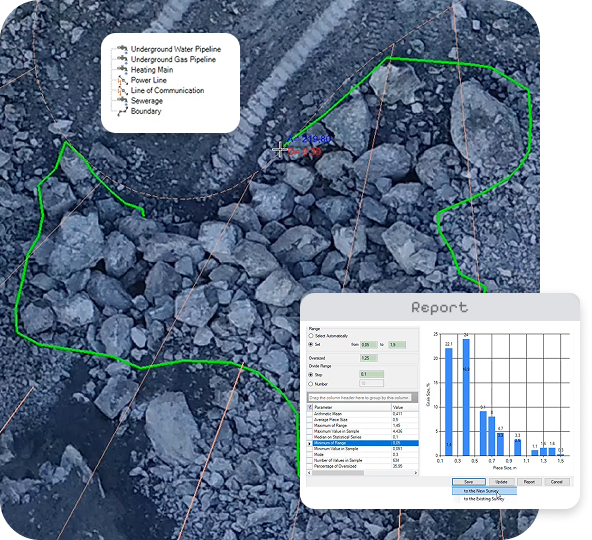
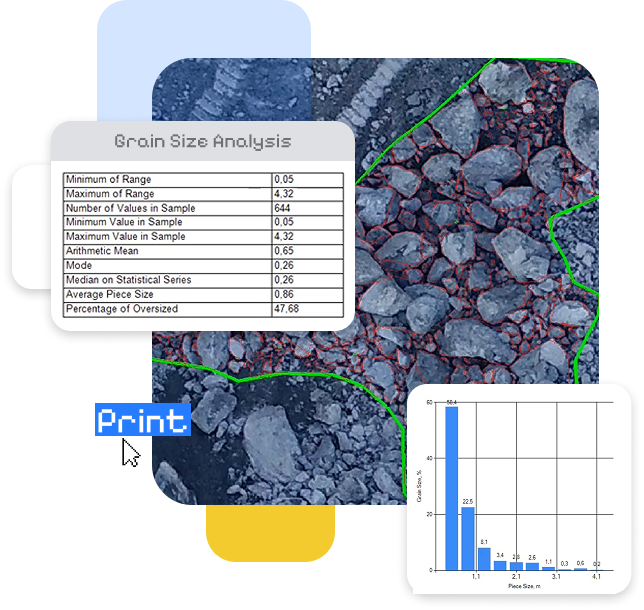
Analyze muckpile fragmentation using drone imagery. Calibrate images with control points for accurate scaling. Automatic rock fragment detection calculates grain size distribution curves.
Compare actual fragmentation against design targets. Store historical data for systematic improvement of blast parameters. Assess drill and blast quality and adjust future patterns based on measured results.
Report and Transfer Data
Generate blast reports with pattern layouts, charge details, timing diagrams, and safety zone maps. Export to CSV, PDF, and other formats for documentation and stakeholder communication. Send drill patterns directly to drilling rigs using built-in data transfer. Blasthole passports track all parameters from design through execution for reconciliation and continuous improvement.







We offer Mining Consulting!
K-MINE combines deep engineering experience with advanced software capabilities, helping mining companies improve operational performance and profitability.
Frequently Asked Questions
Blast design software supports drill pattern layout, charge calculation, blast timing, and detonation simulation. K-MINE's drill and blast module helps engineers control fragmentation, manage explosive usage, and plan safe execution in open pit operations.
Supported arrangements include regular grid, staggered, at 90 degrees, and staggered from second row. You can place holes from block boundaries or use automatic placement algorithms. Twin hole configurations are available with six layout options.
Timing can be built using five delay methods: From Center, By Vectors, By Vectors With Averaging, Along Line, and In Rows. Configure hole-to-hole and row-to-row delays to control energy distribution, fragmentation, and muckpile displacement.
Yes. Blast simulation visualizes the detonation sequence with millisecond resolution and supports dangerous zone calculations to plan personnel and equipment stand-off distances.
Drone images of muckpiles are calibrated with control points, then automatic fragment detection generates grain size distribution results. Compare outcomes to targets and store results to improve future blast designs.
Request a Demo
See how this module can help your mining operations.