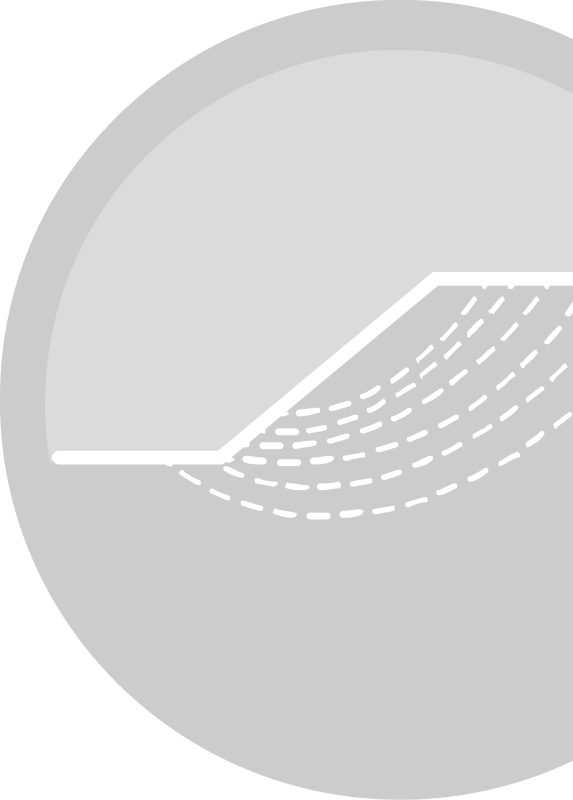
Pit Slope Stability Software
Analyze Slopes. Model Stress. Set Angles.
Assess pit wall stability using limit equilibrium methods (Bishop, Janbu, Force Polygon) and Finite Element Method. Calculate factor of safety, model stress-deformation behavior, and determine optimal slope angles. Store geotechnical properties in block model fields and export results for pit design.
 Download Presentation
 Run Limit Equilibrium Checks
Calculate factor of safety with Bishop Simplified, Janbu, and Force Polygon methods.
Model Stress and Deformation
Use FEM to evaluate stress-strain and deformation for complex geologic conditions.
Apply Results to Pit Design
Store geotechnical properties and ratings in block model fields for slope angle decisions by sector.
Track Slope Conditions Over Time
Track slope condition indicators and set thresholds to flag changes that require review.
Assess Rock Mass Ratings
Perform geotechnical analysis to identify potentially unstable zones and classify risk using geological and geomechanical inputs. Enter physical-mechanical properties, strength parameters, and bench structure to evaluate slope conditions.
Use rating outputs to support slope angle selection and safety margins. Feed results into pit design workflows so geotechnical stability requirements are reflected in sector-based decisions.
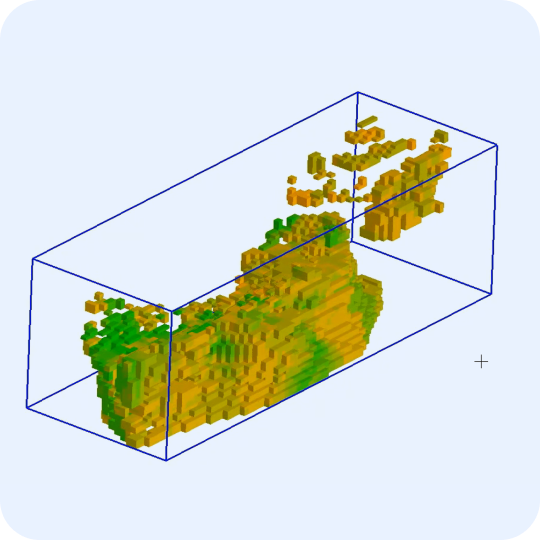
Run Finite Element Modeling
Calculate stresses and deformations using FEM to understand behavior under different loading conditions. Use stress distribution and deformation outputs to assess complex geometries where limit equilibrium assumptions may be insufficient.
Apply results to refine bench configurations and overall pit slope design.
Build Cross-Sections
Create cross-sections through pit walls to visualize stratification, fault zones, and other features that influence stability.
Combine drillhole data, block model properties, and interpreted geology in one view, then use sections as inputs for both limit equilibrium and FEM workflows.
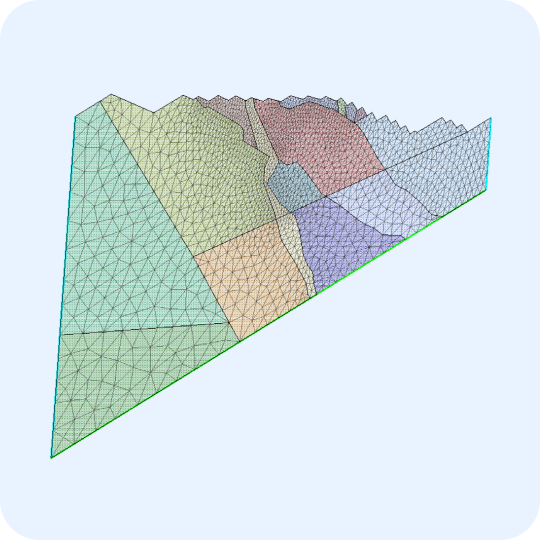
Calculate Factor of Safety With Bishop and Janbu
Calculate factor of safety using Bishop Simplified, Janbu, and Force Polygon methods across heterogeneous slopes.
Include groundwater conditions, tension cracks, and bench loads when required. Review critical slip surfaces and supporting outputs to understand drivers of stability.
Run Limit Equilibrium Analysis
Analyze slope stability using limit equilibrium principles with sliding surface evaluation and factor of safety calculations. Consider slope geometry, rock mass properties, and external loads to quantify stability margins.
Use limit equilibrium for standard geometries and complement with FEM for stress-deformation insight when conditions are complex.

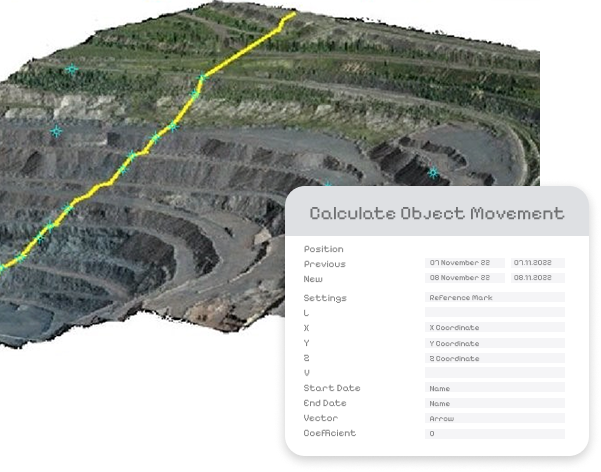
Monitor Slope Conditions
Track slope condition indicators such as displacement and groundwater-related measurements and compare observed trends to expected behavior.
Set thresholds to flag changes that require review and use monitoring information to support validation of analysis assumptions over time.
Generate Reports and Share Results
Generate geotechnical stability reports with factor of safety results, cross-sections, and risk classifications. Use templates or customize formats to match site standards, then export results to block model fields for pit design decisions. Share outputs with geotechnical teams and mine planners in standard formats.








We offer Mining Consulting!
K-MINE combines deep engineering experience with advanced software capabilities, helping mining companies improve operational performance and profitability.
Frequently Asked Questions
Pit slope stability software evaluates open pit wall stability using limit equilibrium and numerical methods. It calculates factor of safety and supports slope angle decisions for mine design and operations.
Limit equilibrium methods include Bishop Simplified, Janbu, and Force Polygon for factor of safety calculations. FEM is supported for stress-deformation analysis in complex geologic conditions.
Yes. Limit equilibrium workflows can incorporate groundwater conditions, tension cracks, and bench loads, which can materially change factor of safety results.
Geotechnical properties and ratings can be stored in block model fields and used to support sector-based slope angle decisions.
You can track slope condition indicators over time, set threshold-based flags for review, and compare observed trends to analysis expectations to support ongoing risk management.
Request a Demo
See how this module can help your mining operations.