Mine Infrastructure Design & Management Software
Build a Digital Master Plan for Site Infrastructure
Maintain mine site infrastructure in a unified 3D environment. Manage buildings, structures, haul roads, waste dumps, stockpiles, and underground utilities with linked documents, photos, and maintenance history. Integrate with Google Maps, LiDAR point clouds, and survey data to keep the master plan current.
 Download Presentation
 Build a Digital Master Plan
Create and update a 3D model of your entire site infrastructure.
Link Assets to Records
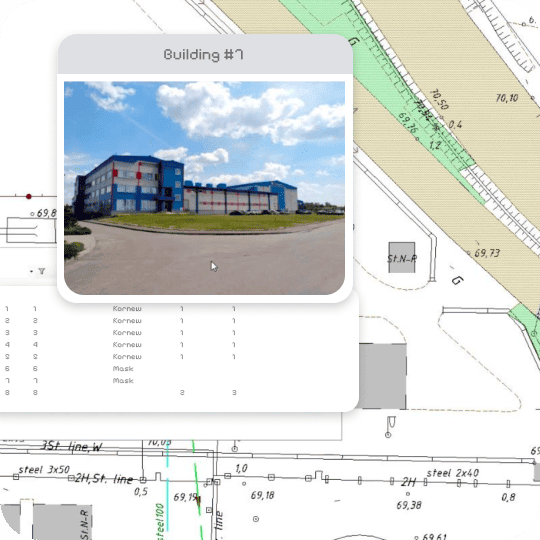
Attach documents, photos, characteristics, and maintenance history to every object.
Use Real-World Data Sources
Bring in Google Maps layers, LiDAR point clouds, and cartographic data.
Control Access by Role
Apply role-based permissions for multi-user collaboration across departments.
Organize Infrastructure Data
Store infrastructure objects in a semantic database where each object includes characteristics, linked documents, photos, relationships, and maintenance records for every building, structure, and utility network.
Use custom fields to match your site standards, then search and filter by location, object type, maintenance status, or linked documentation. Export filtered lists for reports and external workflows.
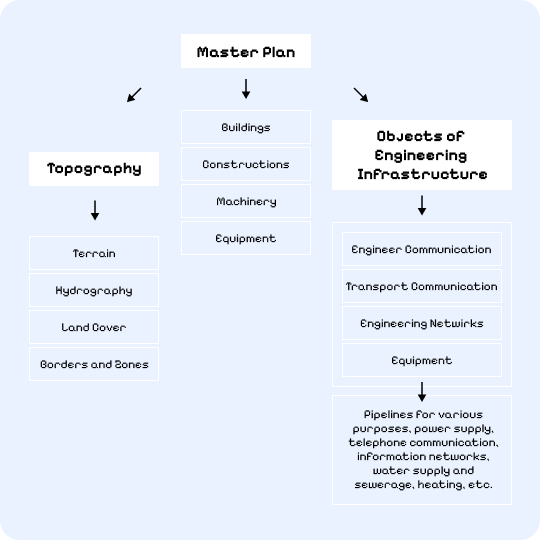

Manage Objects and Layers
Create and edit infrastructure objects in one interface and control visibility by category and layer. Group objects by type, location, or operational status for fast navigation.
Select objects directly in the 3D view or through database queries, then update properties individually or in bulk with changes tracked in history.
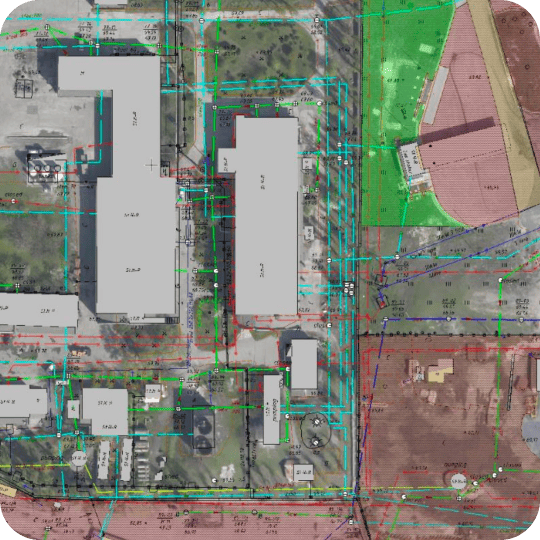

Plan Development and Maintenance
Plan infrastructure development scenarios and predict maintenance needs based on operation history and object attributes. Schedule preventive work before failures occur.
Identify optimal locations for new construction using spatial constraints and existing networks. Compare development scenarios to evaluate costs and logistics before committing to construction.
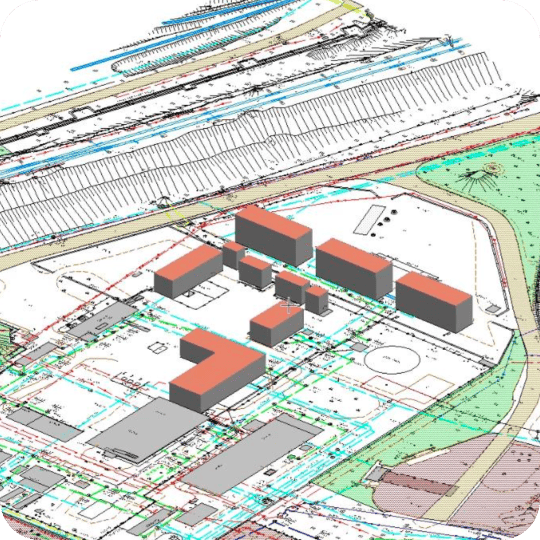
Visualize Infrastructure in 3D
Build detailed 3D models from laser scanning and aerial photography inputs. Import LiDAR point clouds and convert them into solid objects, then add textures for photorealistic visualization of buildings and structures.
Analyze infrastructure condition using accurate spatial data. Measure distances, check clearances, and detect conflicts between objects. Visualize underground utilities alongside surface structures to support excavation and construction planning.
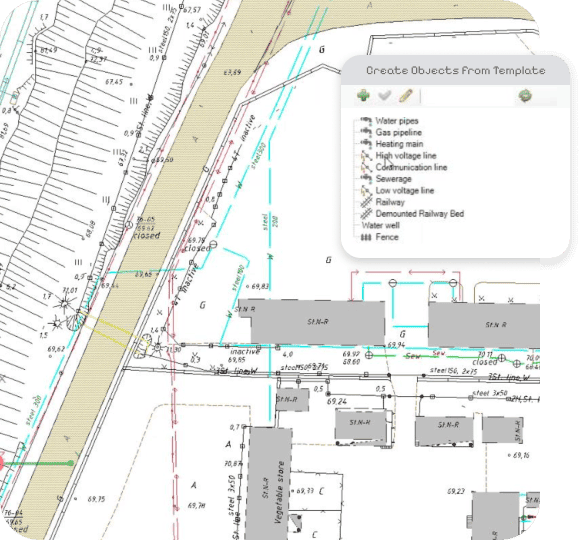

Integrate Across Departments
Consolidate infrastructure data from engineering, maintenance, and operations into one environment with role-based access. Changes by one department are immediately visible to others.
Export reports for stakeholders in standard formats and import updates from external systems to keep the digital master plan current with field conditions.






We offer Mining Consulting!
K-MINE combines deep engineering experience with advanced software capabilities, helping mining companies improve operational performance and profitability.
Frequently Asked Questions
Software for managing mine site infrastructure such as buildings, structures, haul roads, waste dumps, stockpiles, utilities, and underground networks. It stores 3D models with linked documentation, tracks maintenance history, and provides centralized access for all departments.
A Digital Master Plan is a unified 3D model of site infrastructure integrated with cartographic data. It provides visualization and access to current information about buildings, structures, and utilities in one environment.
Objects can store characteristics, linked documents, photos, operation and maintenance history, and relationships to connected elements. Custom fields can be added to match site standards.
Google Maps layers, LiDAR point clouds, laser scanning data, aerial photography, and standard cartographic formats. 3D models can include textures for photorealistic visualization.
Yes. Role-based access control manages permissions across departments so multiple users can work with the same current data while changes are tracked in system history.
Request a Demo
See how this module can help your mining operations.